
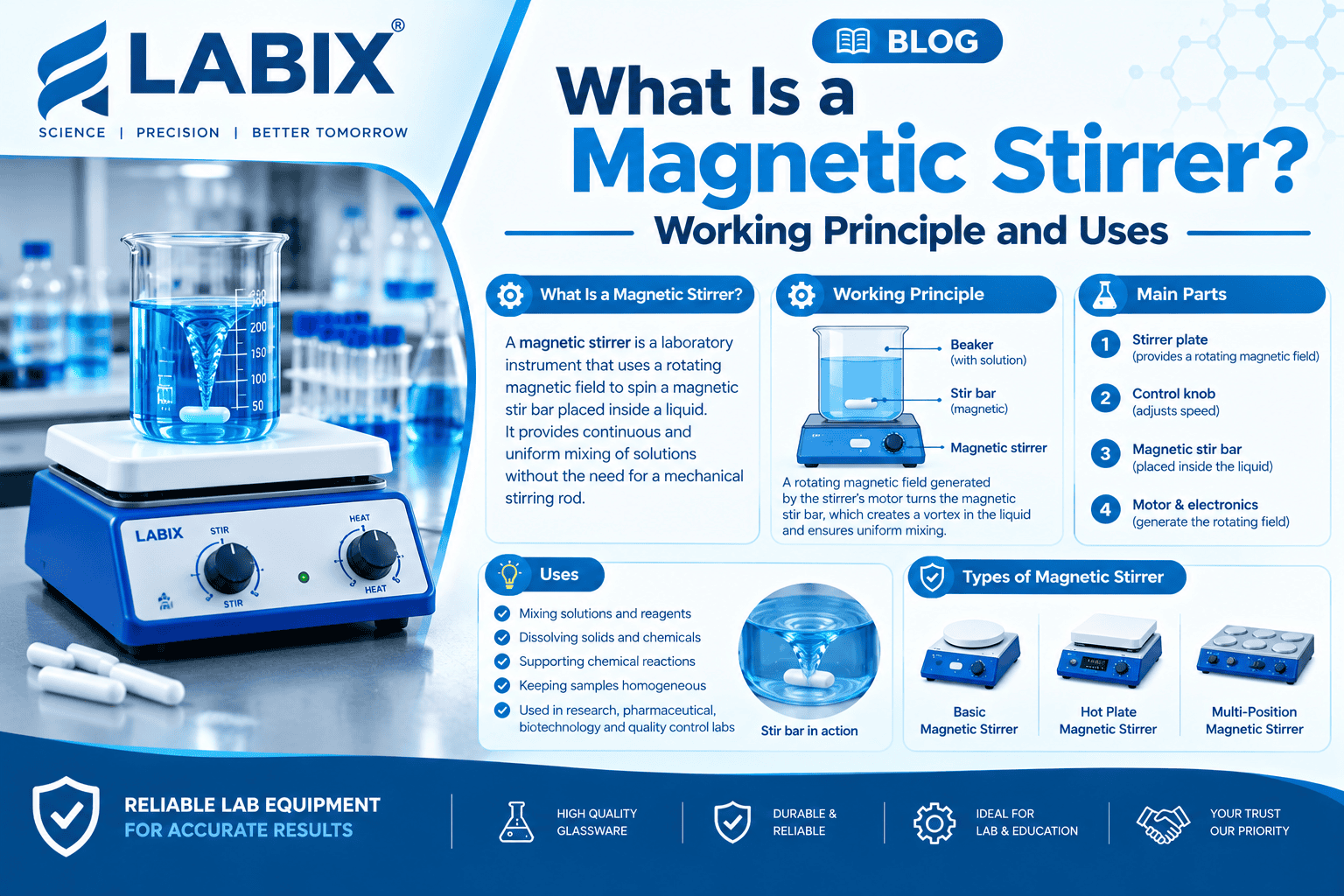
A magnetic stirrer is a laboratory device that mixes liquids by using a rotating magnetic field to spin a small stir bar inside a vessel. No shaft, paddle or seal touches the sample, so the liquid stays in a closed container while it mixes. This makes the magnetic stirrer one of the most common benchtop tools in chemistry, pharmaceutical, biology and teaching laboratories. This guide explains how a magnetic stirrer works, its main parts, the types available, where it is used, its limits, and what to check before choosing one.
What Is a Magnetic Stirrer?
A magnetic stirrer is a benchtop mixing instrument. It has a flat plate, a rotating magnet or a set of electromagnets below the plate, and a speed control. The user places a vessel on the plate, drops a magnetic stir bar into the liquid, and switches the device on. The stir bar then spins and mixes the contents.
People also call it a magnetic stirrer machine, a lab stirrer or a stir plate. Many models add a heating element and are sold as hot plate stirrers.
The main advantage over an overhead stirrer is simplicity. There is no shaft entering the vessel, so there are fewer parts to clean and the vessel can stay covered. The trade-off is that a magnetic stirrer works best with low to moderate viscosity liquids and smaller volumes.
How Does a Magnetic Stirrer Work?
The Working Principle
The working principle of a magnetic stirrer is magnetic coupling. Inside the base, a motor turns a magnet, or electromagnets switch in sequence, which creates a rotating magnetic field. The stir bar inside the vessel is itself magnetic, so it follows that field through the vessel wall and the plate. As the bar turns, it pulls the liquid around it and creates a vortex that mixes the contents.
Different models drive the field in different ways. Some use a motor-driven magnet, and others use an inductive drive with no moving parts under the plate. Check the manufacturer’s manual for how a specific model works.
Step-by-Step Operation
- Place a clean, stable vessel in the center of the plate.
- Add the liquid, then drop in a stir bar of suitable size.
- Set the speed control to its lowest setting and switch on.
- Increase the speed gradually until the mixing looks steady.
- If your model has a heater, switch it on separately and follow the manual.
Starting slowly matters. A sudden high speed can make the bar lose its grip on the magnetic field.
Why a Stir Bar Can Stop Spinning
If the stir bar suddenly jumps, wobbles or stops, the cause is usually decoupling, where the bar can no longer follow the rotating field. Common causes include:
- Speed set too high for the liquid
- A liquid that is too viscous
- A vessel that is off-center or sitting on an uneven surface
- A worn or damaged stir bar
- A magnetic field too weak for the vessel size
Lowering the speed, re-centering the vessel or switching to a different bar often fixes the problem.
Main Parts of a Laboratory Magnetic Stirrer
A laboratory magnetic stirrer is made of a few key parts:
- Top plate: The surface that holds the vessel. Materials and coatings vary by model, so confirm chemical resistance on the datasheet.
- Magnet and drive: The motor-driven magnet or electromagnets that create the rotating field.
- Speed control: A knob or a digital interface that sets the stirring speed, usually in revolutions per minute (rpm).
- Stir bar: A small magnet, usually coated with an inert material such as PTFE. Bars come in different shapes and sizes.
- Heating element (optional): Found on hot plate stirrers, often with temperature control.
Always check the supplier’s specification sheet for plate size, speed range and any heating limits. For a hot plate model, you can see the details of the LABIX magnetic stirrer hot plate on the LABIX Industries website.
Types of Magnetic Stirrers
| Type | Typical use | What to check |
| Standard magnetic stirrer | Mixing and dissolving at room temperature | Speed range, plate size |
| Hot plate magnetic stirrer | Mixing with heating | Temperature range, safety features |
| Multi-position stirrer | Running several samples at once | Number of positions, plate spacing |
| Digital magnetic stirrer | Applications that need precise settings | Display type, speed accuracy |
| Analog magnetic stirrer | Routine, simple mixing | Control type, durability |
LABIX Industries lists a multi positions magnetic stirrer for running several samples and a motorless magnetic stirrer in its stirrers range. Digital models show the set speed on a display, while analog models use a dial. For routine teaching or general preparation work, a basic model is often enough. For repeatable or documented work, a digital model with a clear display is often preferred. Confirm all capacities and ranges from the manufacturer’s documentation.
Uses of a Magnetic Stirrer in Laboratories
Chemical and Pharmaceutical Laboratories
In chemical and pharmaceutical labs, a magnetic stirrer is used to dissolve solids, prepare solutions and buffers, keep reactions evenly mixed, and keep a liquid moving during titration. Gentle, continuous mixing helps keep a solution uniform.
Biology and Healthcare Laboratories
Biology laboratories use magnetic stirrers to prepare culture media and reagents and to mix samples where this is suitable. Whether a particular unit is appropriate for a regulated or clinical workflow depends on the lab’s own procedures and the product documentation, so always check both.
Educational Laboratories
In schools, colleges and universities, magnetic stirrers are common in chemistry practicals. They free students’ hands during an experiment, support demonstrations, and reduce the need for manual stirring with glass rods.
Limitations of Magnetic Stirrers
A magnetic stirrer is not suitable for every job. Be aware of these limits:
- High viscosity: Thick liquids and heavy slurries can make the stir bar decouple. An overhead stirrer is usually a better choice.
- Large volumes: Very large vessels may need a more powerful drive or a different stirrer type.
- Heating limits: A hot plate stirrer has a maximum temperature, and the vessel must also tolerate that heat.
- Vessel type: The vessel needs a flat base and must suit the plate size.
Knowing these limits helps you decide when a magnetic stirrer is enough and when another mixing method is better.
How to Choose a Magnetic Stirrer
Before buying, match the stirrer to your actual work. A short checklist helps:
- Volume: What is the largest vessel you will use?
- Speed range: Do you need slow, gentle mixing or fast stirring?
- Viscosity: Will you mix thin solutions or thicker liquids?
- Heating: Do you need a hot plate, or is room-temperature mixing enough?
- Plate size and material: Does it fit your vessels, and does it resist the chemicals you use?
- Number of positions: Will you run one sample or several?
- Controls and display: Is an analog dial enough, or do you need a digital display?
For procurement teams, it also helps to check:
- Operating manual and documentation
- Warranty and after-sales support
- Availability of spare parts and stir bars
- Electrical compatibility, meaning voltage and plug type for your country
Always take specifications from the product datasheet rather than from general descriptions. If you are comparing equipment across several categories, you can view the full stirrers range or browse the wider laboratory equipment category on the LABIX Industries website.
Safe Use and Basic Maintenance
Good habits keep a magnetic stirrer reliable and safe:
- Use undamaged glassware and check vessels for cracks before heating or stirring.
- Take extra care with flammable solvents, especially near a heated plate.
- Treat the plate as hot after heating and let it cool before cleaning.
- Wipe spills promptly, with the unit unplugged.
- Inspect stir bars for wear, chips or coating damage.
- Follow the operating manual and your laboratory’s own safety procedures.
These are general practices. They do not replace the manufacturer’s instructions or your institution’s safety rules.
Frequently Asked Questions
What is the difference between a magnetic stirrer and a hot plate stirrer?
A magnetic stirrer only mixes. A hot plate stirrer mixes and also heats the vessel. Heating adds hazards such as hot surfaces and solvent vapors, so follow the manual and local safety rules.
Can a magnetic stirrer mix thick or viscous liquids?
Only up to a limit. As viscosity rises, the stir bar is more likely to decouple. For thick liquids or heavy slurries, an overhead stirrer is usually a better option.
What size stir bar should I use?
Choose a bar that suits the vessel’s size and shape. A bar that is too long for the vessel bumps the walls, and one that is too small may not mix well. Check the stirrer manufacturer’s guidance.
Why does my stir bar jump or wobble?
The most common causes are speed set too high, an off-center vessel, an uneven surface, or a worn stir bar. Lower the speed, re-center the vessel and check the bar.
How do I clean and maintain a magnetic stirrer?
Unplug the unit and let it cool. Wipe the plate with a cloth suited to the plate material and the chemicals involved, and check the stir bar for wear. Follow the manual for details.
Conclusion
A magnetic stirrer mixes liquids by spinning a stir bar with a rotating magnetic field, without any shaft entering the vessel. It suits dissolving, preparing solutions, running reactions and teaching practicals, but it has limits with viscous liquids and large volumes. When choosing one, compare volume, speed range, heating needs, plate size and controls against your application, and read the datasheet before you buy. To review the available models, see the laboratory stirrers from LABIX Industries or contact the team with your application requirements.






Add comment