
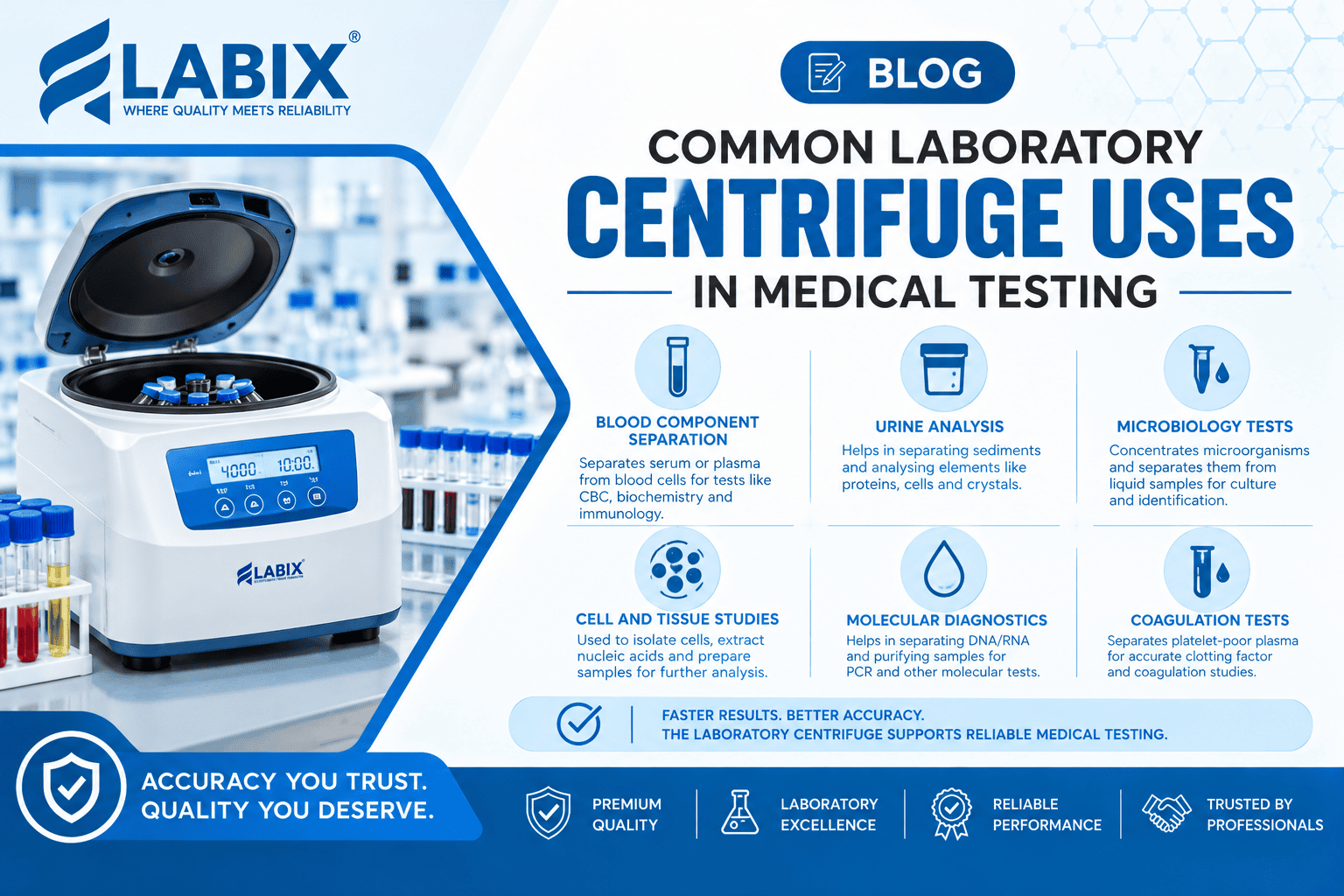
Laboratory centrifuges are used for several specimen-preparation procedures in medical testing. The correct method depends on the sample and the requirements of the test.
Blood Sample Separation for Clinical Chemistry
One of the most common uses of laboratory centrifuges is separating serum or plasma from blood cells before selected clinical chemistry tests.
Tests involving glucose, cholesterol, and liver-function-related measurements may require serum or plasma, depending on the analytical method. Centrifugation separates the required liquid fraction so that it can be transferred for analysis.
For example, a laboratory may collect blood in an appropriate tube, allow it to clot when required, centrifuge the specimen according to the approved procedure, and transfer the separated serum for testing.
Some tests require whole blood or other specimen types instead. Laboratories must follow the specific test requirements rather than centrifuging every blood sample.
Serum and Plasma Preparation
Serum and plasma preparation is another important application of medical laboratory centrifuges.
Serum is obtained after blood clots, whereas plasma is separated from anticoagulated blood. Although both are liquid components of blood, they are not interchangeable for every laboratory test.
Centrifugation helps separate the required liquid fraction from cellular components. Appropriate collection tubes, specimen identification, processing time, and careful transfer help maintain sample integrity.
Incorrect processing may cause hemolysis or other sample-quality problems that interfere with particular tests. Laboratories should follow validated procedures and the instructions supplied for the relevant specimen collection system.
Hematology and Hematocrit Testing
A haematocrit centrifuge is used in procedures that measure packed cell volume (PCV), also known as hematocrit.
In this procedure, an appropriate blood specimen is placed in a capillary tube and centrifuged to pack the red blood cells. The packed cell volume is then measured relative to the total blood column.
Hematocrit measurements can contribute to the assessment of red blood cell concentration when interpreted alongside other laboratory findings and clinical information.
A haematocrit centrifuge does not replace every hematology instrument. A complete blood count, for example, is generally performed using an appropriate hematology analyzer or another validated method.
Urine and Other Clinical Specimen Processing
Centrifugation is also used to prepare selected urine and other clinical specimens.
Some urine microscopy procedures use centrifugation to concentrate sediment for microscopic examination. This can help laboratory professionals examine formed elements in the prepared specimen. However, not every urine test requires centrifugation.
Certain body-fluid and cytology procedures may also involve concentrating cells or other material before further examination. The correct procedure depends on the specimen type, analytical method, and laboratory protocol.
For laboratories evaluating suitable equipment, the Digital Medical Centrifuge is a relevant option to review for medical laboratory applications. Check the model’s specifications and operating instructions before choosing equipment for a specific laboratory procedure.
Specialized Centrifuge Applications in Clinical and Research Laboratories
Beyond routine blood separation, centrifuges support selected specialized diagnostic and research workflows.
Cytology and Specialized Sample Preparation
Cytology involves examining cells to identify changes in their appearance or structure. Certain specimen-preparation methods use centrifugation to concentrate cells before microscopic examination.
The appropriate equipment depends on the specimen, sample volume, preparation method, and required cell recovery. A general-purpose centrifuge may not meet the specific requirements of every cytology application, so laboratories should select equipment that matches the procedure and sample type.
Research and Temperature-Sensitive Samples
Refrigerated centrifuges maintain controlled temperatures during sample processing when laboratory procedures require cooling.
They can support selected research workflows involving biological materials, cell separation, and molecular biology sample preparation.
Temperature control may help maintain sample integrity when refrigerated conditions are specified by the validated procedure. The required temperature varies by application.
Before selecting refrigerated equipment, laboratories should evaluate the temperature range, rotor compatibility, sample capacity, and required centrifugal force.
Types of Laboratory Centrifuges Used in Medical Testing
Different centrifuge types serve different purposes. Understanding their intended applications helps laboratories select equipment suited to their workflows.
Medical Centrifuges
Medical centrifuges help laboratories prepare clinical specimens for routine tests and separate serum when testing procedures require it. Their suitability depends on the rotor, tube configuration, sample capacity, and operating range.
Haematocrit Centrifuges
Haematocrit centrifuges are designed for procedures involving capillary tubes and packed cell volume measurements. Laboratories should verify the supported tube dimensions and operating instructions before use.
Refrigerated Centrifuges
Refrigerated centrifuges provide temperature control during procedures that require specified processing conditions. They may be suitable for selected clinical and research applications involving temperature-sensitive samples.
Microcentrifuges
Microcentrifuges handle small-volume samples and support research tasks and specialized laboratory procedures.
The rotor and tube configuration must match the intended sample volume and required centrifugal force.
Laboratories can explore the LABIX laboratory centrifuge range to review available equipment categories and identify potentially suitable models.
How to Choose a Centrifuge for a Medical Laboratory
Selecting a suitable centrifuge requires an understanding of the laboratory’s testing procedures, workload, and sample-processing requirements.
Sample Type and Processing Requirements
Start by identifying the specimens processed in the laboratory, such as blood, urine, or small-volume research samples. Determine whether the intended applications involve serum separation, hematocrit measurement, or other specialized preparation procedures.
Capacity, Rotor Compatibility, and RCF
Check the number and size of tubes processed during a typical run. Confirm that the centrifuge supports the required rotor, adapters, tube dimensions, and centrifugal force.
Maximum RPM should not be the only selection criterion. The required RCF must be achievable with the selected rotor configuration.
Temperature Control and Safety Features
Determine whether the intended procedure requires refrigeration. Review relevant safety features, including lid interlocks and imbalance detection where available.
Procurement teams should also consider operating manuals, maintenance requirements, spare-part availability, and technical support. Comparing these factors against actual laboratory needs helps avoid selecting unsuitable equipment.
Safe Operation and Maintenance Considerations
Safe centrifuge operation is important in clinical and research laboratories. Incorrect loading, damaged components, or inappropriate settings can create mechanical hazards and compromise sample integrity.
Correct Loading and Balancing
Balance opposing tubes according to the manufacturer’s instructions. Use compatible tubes, rotors, buckets, and adapters, and inspect components for damage before operation.
Follow the approved laboratory procedure for speed, RCF, processing time, and temperature. Never open the lid while the rotor is moving or bypass a safety interlock.
Cleaning and Routine Inspection
Clean and maintain the centrifuge according to the manufacturer’s instructions. Use appropriate protective equipment and approved decontamination procedures when handling biological specimens.
If a tube breaks or a biological spill occurs, follow the laboratory’s established incident-response procedure. Laboratory staff should receive appropriate training before operating or maintaining centrifuge equipment.
Common Mistakes to Avoid When Using a Laboratory Centrifuge
Common mistakes during centrifugation include:
- Selecting settings based only on RPM without confirming the required RCF.
- Using incompatible tubes, rotors, or adapters.
- Failing to balance the load correctly.
- Applying the same preparation method to different specimen types without checking the relevant procedure.
- Delaying sample processing beyond the permitted time.
- Ignoring unusual vibration, noise, or signs of component damage.
- Assuming centrifugation alone makes every specimen suitable for every diagnostic test.
Laboratories can reduce these risks by following validated procedures, training staff, maintaining equipment, and consulting the operating manual whenever requirements are unclear.
Frequently Asked Questions
What Are the Main Uses of Laboratory Centrifuges?
Laboratory centrifuges separate serum and plasma, support hematocrit testing, prepare urine samples for microscopy, and help process specimens for specialized clinical and research tests.
Why Is a Centrifuge Used to Separate Serum from Blood?
Centrifugation helps separate serum from the clot and cellular components after blood has clotted. The resulting serum can then be used for tests that require this specimen type.
What Is the Difference Between a Medical Centrifuge and a Haematocrit Centrifuge?
A medical centrifuge helps laboratories prepare samples for various clinical tests. A haematocrit centrifuge specifically spins capillary tubes to pack red blood cells for packed cell volume (PCV) measurement.
Can the Same Centrifuge Be Used for Blood and Urine Samples?
It may be possible if the equipment, rotor, containers, and operating conditions are compatible with both applications. The laboratory must follow the validated procedure for each specimen type.
What Is the Difference Between RPM and RCF?
RPM measures the number of rotor revolutions per minute, while RCF describes the relative centrifugal force experienced by the sample. RCF depends on rotational speed and rotor radius.
How Do I Choose a Centrifuge for a Clinical Laboratory?
Consider the sample type, required RCF, rotor compatibility, capacity, temperature requirements, safety features, and maintenance needs. Verify the manufacturer’s specifications before purchasing equipment.
Conclusion
Laboratory centrifuges support many medical testing workflows, from blood serum and plasma separation to hematocrit measurement and selected specimen-preparation procedures. Selecting suitable equipment requires careful consideration of sample type, centrifugal force, rotor compatibility, capacity, temperature control, and safety requirements.
Before purchasing a centrifuge, laboratory professionals should compare their requirements with the manufacturer’s specifications and applicable laboratory procedures. Reviewing available equipment and confirming its suitability for the intended workflow can help laboratories make informed purchasing decisions.









Add comment