
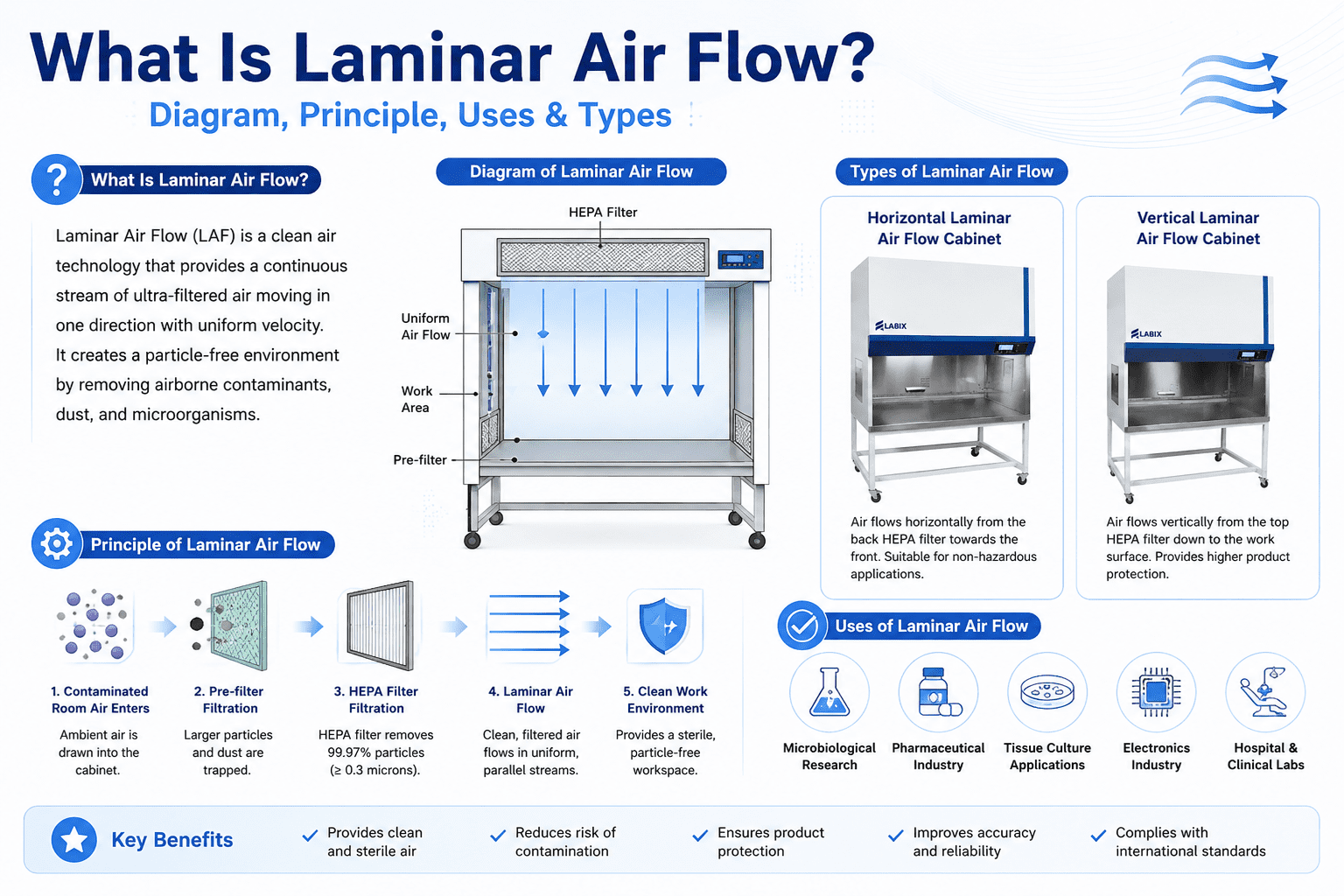
Laminar Air Flow (LAF) is a laboratory system designed to provide a clean and controlled working environment by directing filtered air in a smooth, uniform flow. It is commonly used in microbiology, tissue culture, pharmaceutical research, electronics, and other applications where airborne particles can affect sensitive materials and processes.
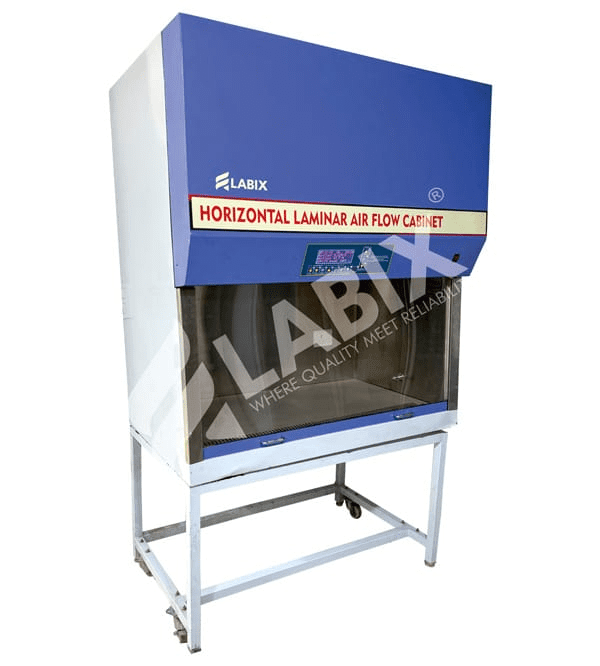
What is Laminar Air Flow?
Laminar Air Flow is a controlled airflow system in which air passes through a high-efficiency filter and moves across the work area in parallel layers. This continuous flow helps reduce the entry and accumulation of airborne particles around samples, instruments, and work surfaces.
The term “laminar” refers to smooth and orderly airflow. Unlike turbulent air, which moves unpredictably, laminar airflow travels in a controlled direction with minimal mixing. This makes LAF systems useful for applications that require a clean working environment.
Laminar Air Flow Principle
The laminar air flow principle is based on moving filtered air in a uniform, unidirectional pattern. Air is drawn into the unit and first passes through a pre-filter to remove larger particles. It then passes through a HEPA filter, which removes very fine airborne particles.
The filtered air is subsequently delivered across the work surface at a consistent flow. This continuous airflow helps carry contaminants away from the working area and reduces the possibility of particles settling on exposed samples or equipment.
Laminar Air Flow Diagram
A laminar air flow diagram illustrates the major components of the system and the direction in which air travels. A typical diagram may include the blower, pre-filter, HEPA filter, work area, and airflow direction.
In a vertical LAF system, air generally moves from the top of the chamber downward. In a horizontal LAF system, air flows from the rear of the chamber toward the front.
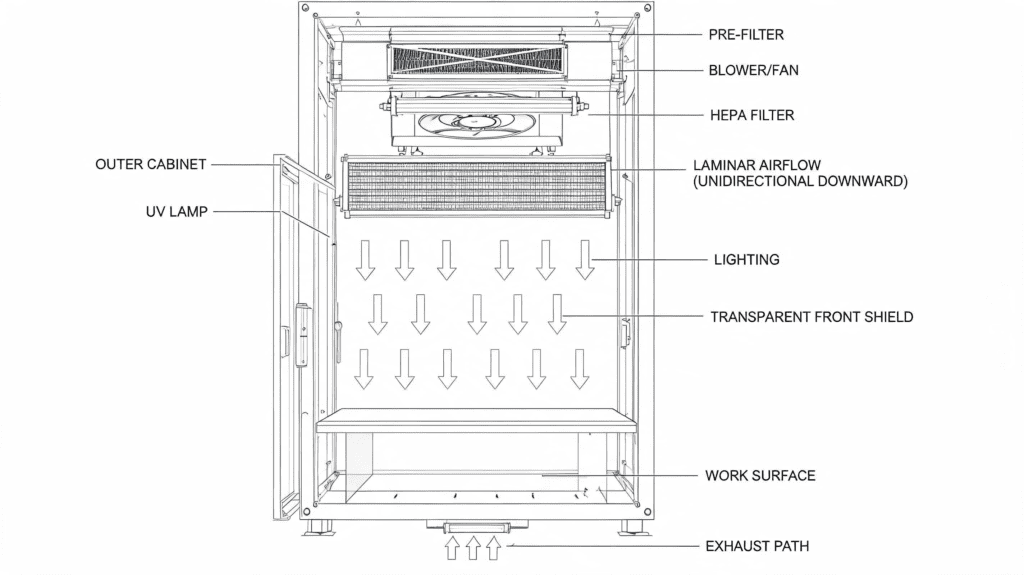
Understanding the airflow path makes it easier for students, laboratory technicians, and operators to understand how the system filters and distributes air across the workspace.
Laminar Air Flow Chamber
The laminar air flow chamber is the main enclosure that contains the airflow and filtration components. It commonly includes a work surface, blower, filtration system, lighting, and other features depending on the model.
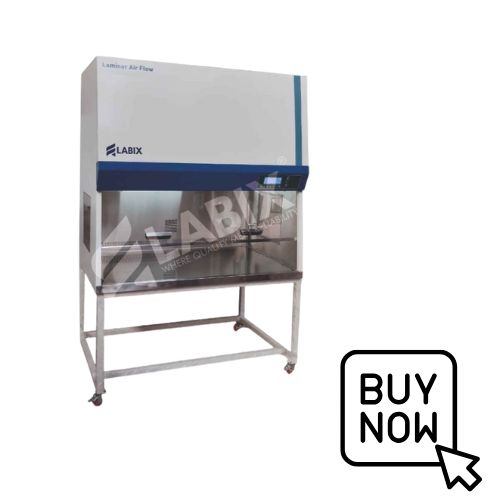
The chamber is designed to provide a controlled workspace for handling samples, cultures, and other sensitive materials. Smooth internal surfaces also make the unit easier to clean and maintain.
A well-designed chamber should provide adequate workspace, consistent airflow, easy cleaning, and convenient access for laboratory operations.
Main Parts of the System
A typical laminar air flow unit consists of several key components:
- Cabinet or enclosure: Provides the main structure and protects the working area.
- Pre-filter: Removes larger airborne particles before air reaches the HEPA filter.
- HEPA filter: Filters very fine airborne particles and helps maintain clean airflow.
- Blower or fan: Draws air into the system and moves it through the filters.
- Work surface: Provides a clean area for placing samples, instruments, and materials.
- UV lamp: Available in some models for pre-use surface disinfection.
- Lighting system: Provides sufficient visibility during laboratory procedures.
All these components work together to maintain a consistent and controlled airflow environment. Regular maintenance of each component is important for reliable performance.
Laminar Air Flow Uses
Laminar air flow uses extend across several laboratory and industrial applications where protection from airborne contamination is important.
Common applications include:
- Microbiology laboratories
- Tissue culture laboratories
- Pharmaceutical research and processing
- Sample preparation
- Food testing laboratories
- Clinical and research laboratories
- Electronics and semiconductor assembly
- Precision component handling
In microbiology, LAF systems can be used for activities such as inoculation and sample preparation. In tissue culture, they help provide a controlled environment for handling cultures. They are also used in applications where dust and airborne particles can affect sensitive components or materials.
Types of Laminar Air Flow
The two common types of laminar air flow are:
- Vertical Laminar Air Flow
- Horizontal Laminar Air Flow
Both systems use filtered air and provide unidirectional airflow, but the direction of air movement and typical applications differ. Selecting the appropriate configuration depends on the work being performed and the level of product or sample protection required.
Vertical Laminar Air Flow
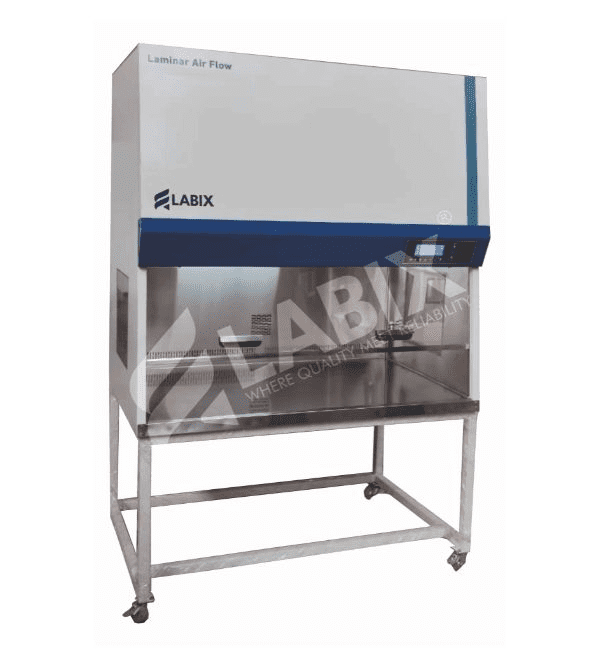
In vertical laminar air flow, filtered air moves from the top of the chamber downward toward the work surface. The HEPA filter is generally positioned above the working area, allowing clean air to travel vertically through the chamber.
This configuration is commonly used in laboratory applications involving microbiology, pharmaceutical work, and aseptic handling. The downward airflow helps maintain a clean working zone around samples and materials.
Horizontal Laminar Air Flow
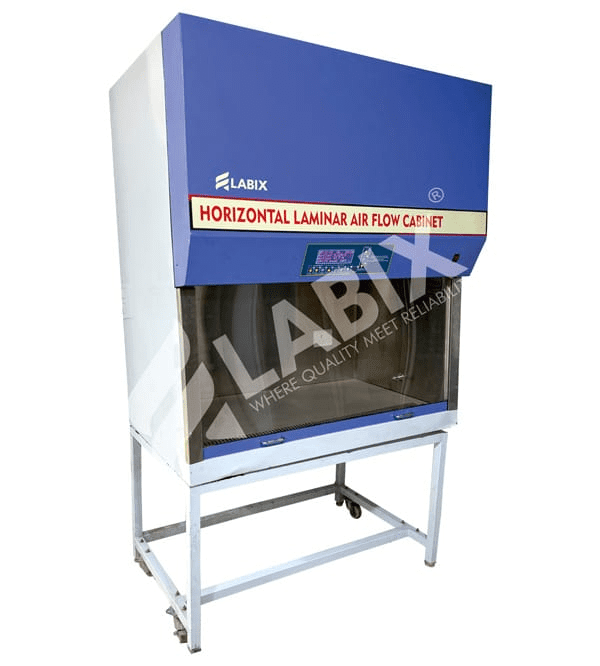
In horizontal laminar air flow, filtered air moves from the rear of the chamber toward the front. The HEPA filter is positioned at the back, allowing clean air to travel horizontally across the work surface.
Horizontal LAF systems are commonly used where product protection and clean working conditions are important, including certain electronics, instrument assembly, and laboratory applications.
However, because the airflow moves toward the front of the unit, users should carefully consider the materials being handled. Horizontal LAF should not be treated as a substitute for equipment designed specifically for hazardous biological or chemical containment.
Vertical vs Horizontal
Here is a simple comparison of the two main designs:
| Feature | Vertical Laminar Air Flow | Horizontal Laminar Air Flow |
|---|---|---|
| Air direction | Top to bottom | Back to front |
| Filter position | Top of chamber | Rear of chamber |
| Best for | Microbiology, pharmaceutical, aseptic work | Electronics, precision assembly, product protection |
| Air path | Downward over work area | Across the work surface |
| Operator exposure | Generally lower | May face direct airflow |
| Space use | Compact and versatile | Simple and direct airflow design |
Both configurations can provide effective clean-air conditions when properly selected, installed, operated, and maintained. The appropriate choice depends on the specific application and materials being handled.
How It Works
The operation of a laminar air flow unit follows a straightforward process.
First, the blower draws surrounding air into the unit. The incoming air passes through a pre-filter, which captures larger particles such as dust and lint. The air then passes through the HEPA filter for fine-particle filtration.
After filtration, clean air is distributed evenly across the work surface in a continuous, unidirectional stream. This controlled airflow helps reduce airborne contamination around the working area.
Before operation, the work surface should generally be cleaned, and materials should be arranged so they do not unnecessarily obstruct airflow. Excessive movement and overcrowding can interfere with the airflow pattern and reduce the effectiveness of the clean working zone.
Advantages and Limits
Laminar Air Flow systems offer several benefits for controlled laboratory work:
- Helps reduce airborne contamination
- Provides a controlled clean-air workspace
- Supports aseptic laboratory procedures
- Protects sensitive samples and materials
- Provides consistent unidirectional airflow
- Can improve cleanliness during sample handling
However, LAF systems also have limitations. They are primarily designed to provide product or sample protection, rather than comprehensive operator protection. They should not be used as a replacement for a biosafety cabinet when working with hazardous biological materials.
Correct operation, regular cleaning, appropriate filter maintenance, and proper laboratory practices are essential for effective performance.
Maintenance Tips
Regular maintenance is essential for maintaining the performance and reliability of a laminar air flow system.
Important maintenance practices include:
- Clean the work surface regularly with an appropriate disinfectant.
- Inspect filters according to the manufacturer’s recommended schedule.
- Replace filters when required.
- Check airflow performance periodically.
- Keep the interior of the chamber clean and free from unnecessary materials.
- Follow the manufacturer’s operating and maintenance instructions.
If the unit includes a UV lamp, it should be operated according to the manufacturer’s instructions. Direct exposure of skin and eyes to UV radiation should be avoided.
Conclusion
Laminar Air Flow is an important clean-air system used to create a controlled working environment for applications where airborne contamination can affect samples, products, or processes.
Understanding the laminar air flow principle, laminar air flow diagram, laminar air flow chamber, laminar air flow uses, and different types of laminar air flow can help laboratories select and operate the appropriate system for their requirements.
Whether using a vertical laminar air flow or horizontal laminar air flow system, proper operation, cleaning, maintenance, and application-specific selection are essential for achieving reliable performance.





Add comment