
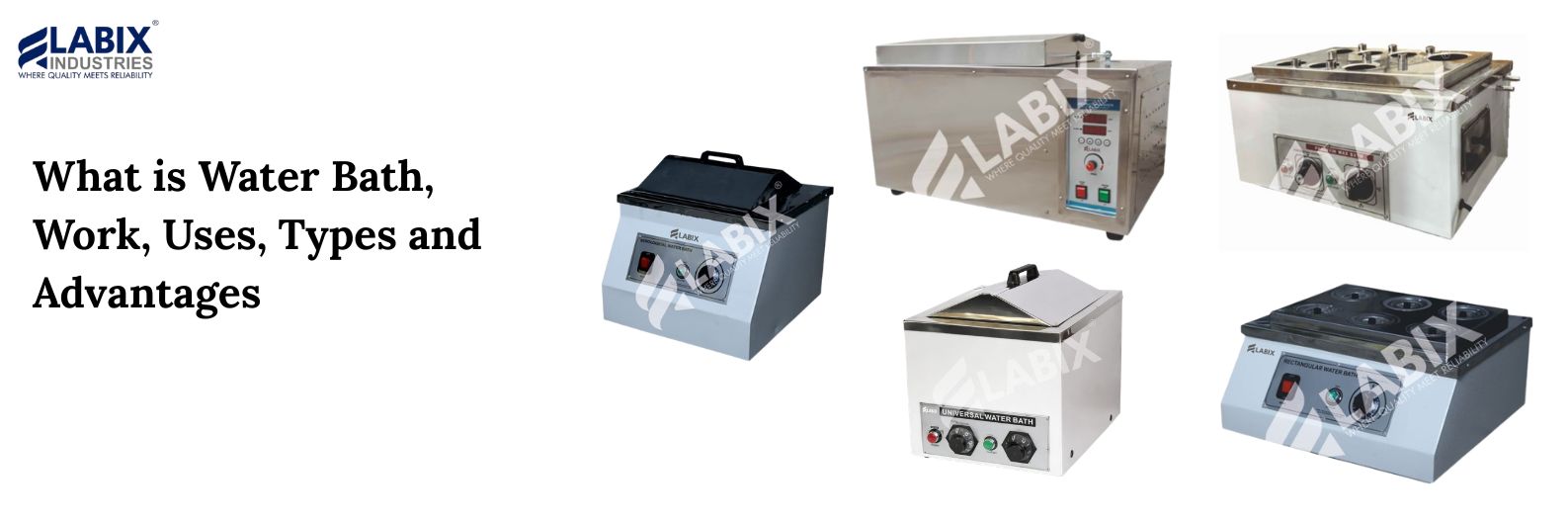
A laboratory water bath is a commonly used laboratory heating instrument designed to provide gentle, uniform, and controlled heating. It is widely used in research laboratories, pharmaceutical facilities, medical and clinical laboratories, biotechnology, educational institutions, and industrial testing environments.
Unlike direct heating, a water bath transfers heat through a controlled water medium, helping maintain stable temperatures for samples and laboratory procedures.
What is Laboratory Water Bath?
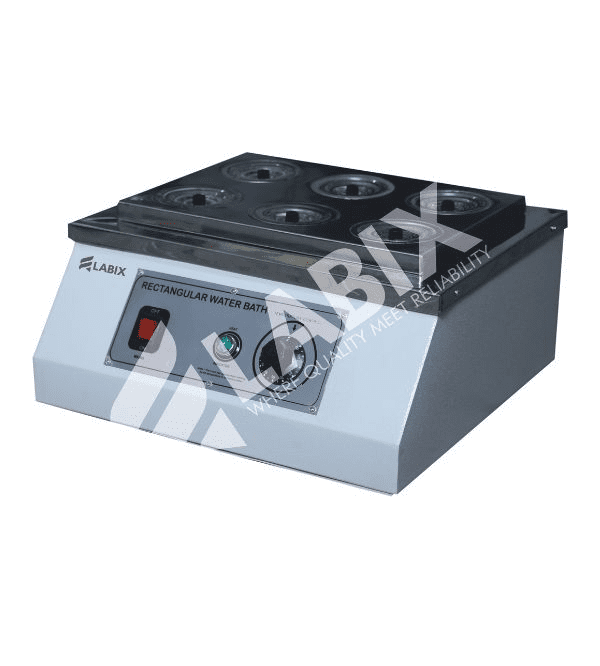
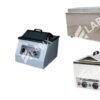
A laboratory water bath is a heating device in which samples are placed in containers and heated using water maintained at a selected temperature.
A typical water bath consists of:
- Stainless-steel chamber or tank
- Heating element
- Temperature controller or thermostat
- Insulation
- Sample-support arrangement
The water surrounding the sample containers provides indirect and relatively uniform heating, making the equipment suitable for procedures that require controlled temperature conditions.
How Does a Laboratory Water Bath Work?
The working principle of a laboratory water bath is based on controlled heating and heat transfer through water.
The basic process is:
- Water is added to the bath chamber.
- The heating element warms the water.
- A thermostat or digital controller maintains the selected temperature.
- Samples are placed in suitable containers inside the bath.
- Heat is transferred from the water to the sample containers.
- The samples receive controlled and relatively uniform heating.
Because water distributes heat throughout the bath, it can provide more consistent heating than direct exposure to a heating element.ons.
Why is a Laboratory Water Bath Important in Laboratories?
Many laboratory procedures require stable heating rather than direct exposure to a flame or heating surface. A water bath provides a controlled environment for applications where temperature consistency is important.
Key benefits include:
- Uniform heating
- Controlled temperature
- Gentle indirect heating
- Reduced risk of direct-heat damage
- Consistent experimental conditions
- Easy operation
These characteristics make water baths useful across research, pharmaceutical, medical, educational, and industrial laboratories.
Types of Laboratory Water Bath
Different laboratory applications require different water bath configurations. Common types include the following.
1. Serological Water Bath

A serological water bath is designed for controlled heating and incubation of samples used in serological, clinical, microbiological, and medical laboratory applications.
It provides uniform heat distribution and controlled temperature conditions.
Features
- Controlled temperature operation
- Uniform heat distribution
- Compact design
- Stainless-steel construction
- Suitable for routine laboratory applications
Applications
Serological water baths may be used for:
- Blood testing
- Clinical diagnostics
- Immunology applications
- Medical research
- Sample incubation
The LABIX article describes a temperature range of 5°C above ambient to 100°C for this type.
2. Universal Water Bath
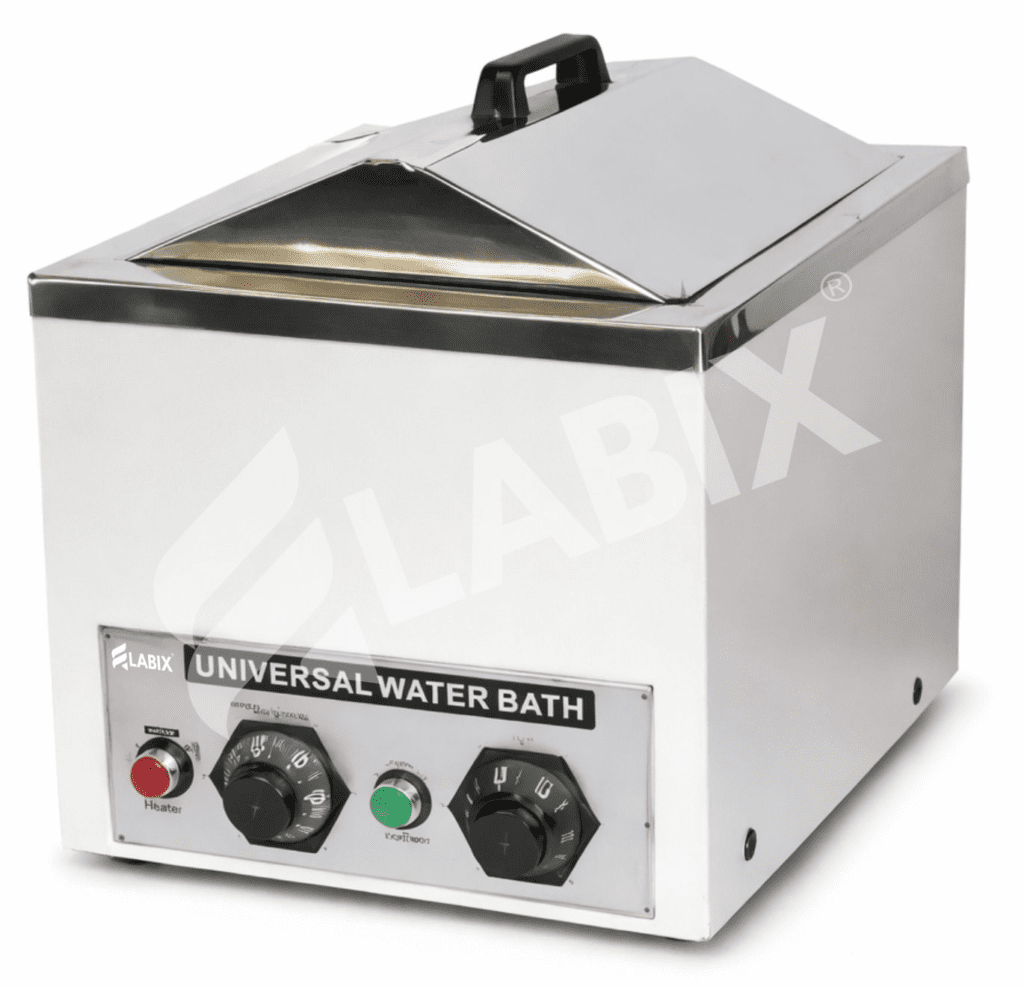
A universal water bath is a versatile heating system designed for general laboratory applications requiring controlled temperatures.
The current LABIX article describes a stainless-steel inner chamber, insulation, uniform heat distribution, operation up to 100°C, and stated accuracy of ±1°C.
Applications
Universal water baths can be used in:
- Educational laboratories
- Research centers
- Chemical analysis
- Routine laboratory procedures
3. Precision Water Bath
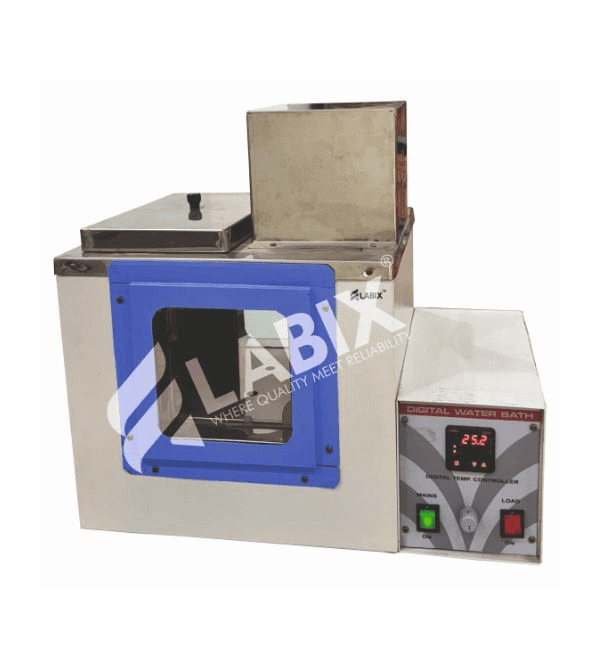
A precision water bath is designed for applications where stable and accurate temperature control is important.
It is particularly suitable for laboratory environments involved in research, pharmaceutical testing, quality control, and analytical work.
Features
- Digital temperature control
- Precise heating
- Stable operating conditions
- Minimal temperature variation
Applications
- Pharmaceutical testing
- Quality-control laboratories
- Biotechnology research
- Advanced scientific experiments
4. Shaking Water Bath
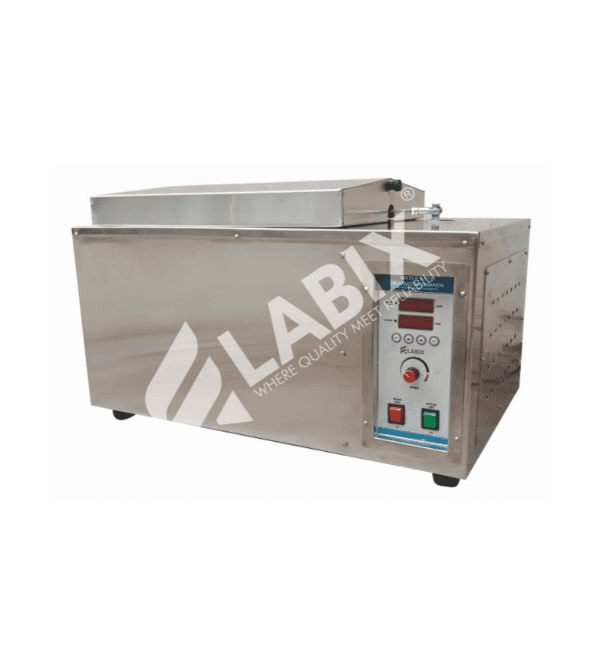
A shaking water bath is a laboratory instrument that combines precise temperature control with continuous sample agitation. It provides uniform heating and adjustable shaking for microbiology, biochemical reactions, cell culture studies, and sample incubation. With accurate temperature stability and stainless-steel construction, it ensures reliable and consistent experimental results. (50 words)
Features:
- Continuous shaking mechanism
- Uniform mixing
- Controlled heating
Applications:
- Cell culture studies
- Enzyme reactions
- Microbiology experiments
- Sample incubation
5. Rectangular Water Bath
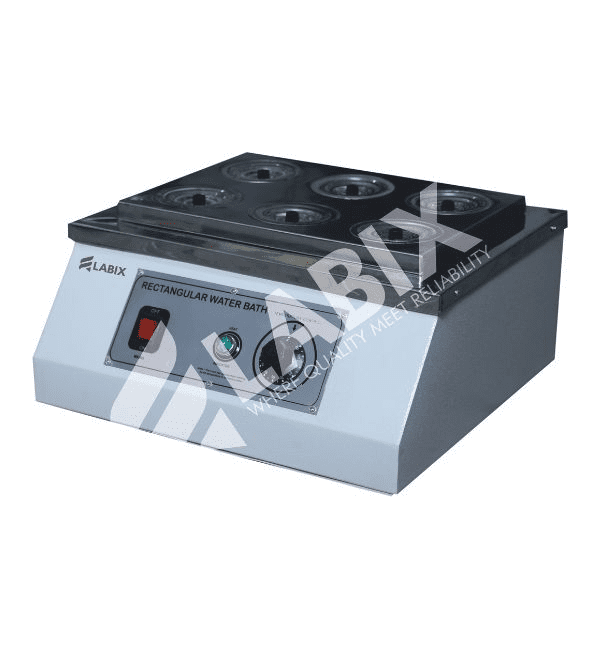
A rectangular water bath provides a relatively large working area and can accommodate multiple samples depending on its chamber capacity.
It is suitable for routine heating and incubation applications in academic, industrial, and research laboratories.
Features
- Large working area
- Multiple-sample capacity
- Easy operation
- Controlled temperature
Applications
- Industrial laboratories
- Academic institutions
- Research facilities
6. Paraffin Water Bath
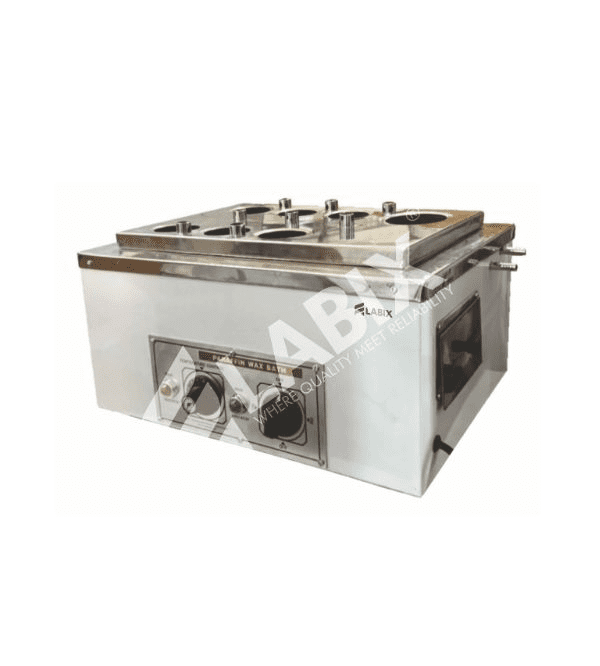
A paraffin water bath is a specialized laboratory and therapeutic heating unit used for melting and maintaining paraffin wax at controlled temperatures. It provides uniform heat distribution and accurate temperature control, making it ideal for histopathology, cosmetic treatments, laboratory procedures, pain relief therapy, improved circulation, and skin hydration applications.
Features:
- Uniform wax melting
- Stable temperature control
- Efficient operation
Applications:
- Tissue processing
- Histological examinations
- Medical laboratories
Laboratory Water Bath Uses
Laboratory water baths are used for a wide range of heating and incubation applications. The exact use depends on the type of water bath, temperature requirements, sample characteristics, and laboratory procedure.
1. Sample Incubation
One of the common applications is maintaining samples at a controlled temperature during incubation.
Applications can include:
- Biological sample incubation
- Bacterial studies
- Cell culture-related work
- Enzyme studies
2. Heating Reagents
Water baths can provide gentle heating for reagents and solutions that need to be warmed before use.
They may be used to:
Maintain solutions at selected temperatures
Warm laboratory solutions
Assist with dissolving materials
Prepare laboratory mixtures
3. Molecular Biology Applications
Water baths may be used in molecular biology workflows where controlled heating is required, including certain sample preparation and molecular testing procedures.
The current LABIX article lists applications such as DNA extraction, PCR preparation, molecular testing, and genetic studies.
4. Pharmaceutical Testing
Pharmaceutical laboratories use controlled heating equipment for various testing and laboratory procedures.
- Potential applications include:
- Quality-control procedures
- Drug development
- Dissolution-related testing
- Stability testing
5. Clinical and Medical Laboratories
Water baths can be used in clinical and medical laboratory procedures that require controlled sample temperatures.
Applications listed in the LABIX article include:
- Blood sample analysis
- Serological testing
- Diagnostic procedures
- Pathology research
The equipment ensures accurate and repeatable test results.
6. Histopathology Procedures
Specialized water baths can be used during histopathology workflows, including applications involving:
- Tissue section stretching
- Paraffin wax processing
- Slide preparation
This helps improve sample quality and microscopic examination.
7. Food and Beverage Testing
Food-testing laboratories may use water baths during procedures involving controlled sample heating.
Applications can include laboratory testing of:
- Dairy products
- Beverage samples
- Nutritional content
- Food safety parameters
Advantages of Laboratory Water Bath
Proper operation and maintenance are important for safe and reliable performance.
Maintain the Correct Water Level
Keep the water level within the manufacturer’s recommended range and ensure that the heating element is adequately covered where required.
Clean the Chamber Regularly
Regular cleaning helps reduce contamination and mineral deposits that can affect operation.
Check the Temperature
Verify the temperature setting before beginning an experiment and monitor the bath when required.
Keep Electrical Connections Dry
Water and electrical components should be handled carefully. Keep electrical connections and external controls dry.
Use Suitable Containers
Use laboratory containers appropriate for the temperature and application. Avoid using damaged or unsuitable containers.
Follow Manufacturer Instructions
Always operate the equipment according to its manufacturer’s instructions, specifications, and safety recommendations.
Safety Tips While Using a Water Bath
Proper operation and maintenance are important for safe and reliable performance.
Maintain the Correct Water Level
Keep the water level within the manufacturer’s recommended range and ensure that the heating element is adequately covered where required.
Clean the Chamber Regularly
Regular cleaning helps reduce contamination and mineral deposits that can affect operation.
Check the Temperature
Verify the temperature setting before beginning an experiment and monitor the bath when required.
Keep Electrical Connections Dry
Water and electrical components should be handled carefully. Keep electrical connections and external controls dry.
Use Suitable Containers
Use laboratory containers appropriate for the temperature and application. Avoid using damaged or unsuitable containers.
Follow Manufacturer Instructions
Always operate the equipment according to its manufacturer’s instructions, specifications, and safety recommendations.
Choosing the Right Water Bath
When selecting a water bath, consider:
| Factor | Importance |
|---|---|
| Temperature Range | Must match application requirements |
| Accuracy | Essential for research and testing |
| Capacity | Depends on sample volume |
| Material | Stainless steel offers durability |
| Control System | Digital controls provide better precision |
| Application | Choose according to laboratory needs |
A good water bath should provide reliable temperature stability, easy operation, and long-term durability.
Laboratory Water Bath Maintenance
Regular maintenance can help support reliable operation and extend equipment service life.
Recommended practices include:
- Clean the chamber at regular intervals.
- Replace or refresh water as required.
- Remove mineral deposits when necessary.
- Inspect the heating element and controls.
- Check temperature performance periodically.
- Keep the equipment exterior clean and dry.
- Follow the manufacturer’s maintenance schedule.
For applications requiring specific temperature accuracy, appropriate calibration and verification procedures should also be followed according to laboratory requirements.
Applications Across Different Industries
Laboratory water baths support controlled-temperature procedures in several sectors, including:
- Pharmaceutical: testing, research, and quality control
- Biotechnology: sample preparation and biological research
- Medical: clinical and diagnostic laboratory procedures
- Education: practical laboratory experiments
- Chemical: reagent and solution preparation
- Food & Beverage: laboratory testing and analysis
- Research: controlled-temperature experiments
- Industrial Laboratories: testing and quality-control procedures
Conclusion
A laboratory water bath is an important laboratory heating instrument for applications that require controlled, stable, and relatively uniform temperatures. Its indirect heating method makes it useful for sample incubation, reagent warming, pharmaceutical testing, medical laboratory procedures, biotechnology, food testing, and research.
Different types-including serological, universal, precision, shaking, rectangular, and paraffin water baths-are designed for different laboratory requirements. Selecting the right model requires consideration of temperature range, accuracy, capacity, construction, control system, and intended application.
Proper water-level management, cleaning, temperature monitoring, electrical safety, and routine maintenance are also important for dependable operation.
For laboratories evaluating heating equipment, understanding the working principle, types, uses, advantages, and selection factors of laboratory water baths can help identify equipment suited to their specific procedures and operating requirements.




Add comment